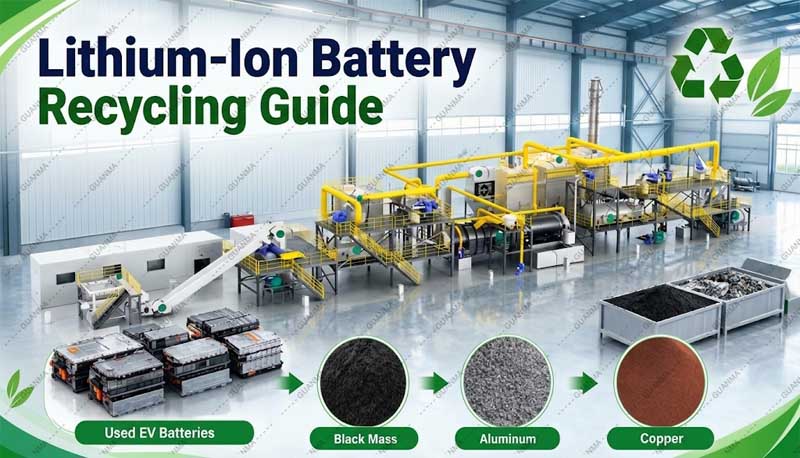
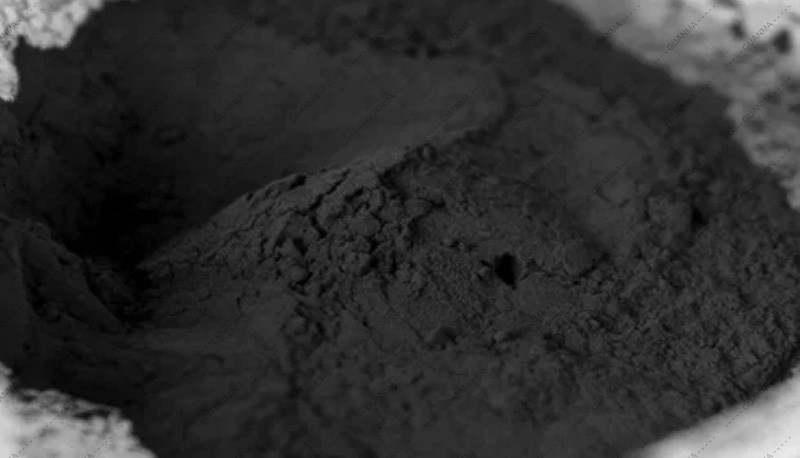
What is black mass in lithium-ion batteries recycling? Black mass is a dark, powder-like or granular material recovered during lithium-ion battery recycling. It contains active electrode materials, including lithium-bearing cathode compounds and graphite, along with varying amounts of other metals and residual impurities.
What Does Black Mass Contain?
The composition of black mass depends on the battery chemistry and lithium battery recycling process.
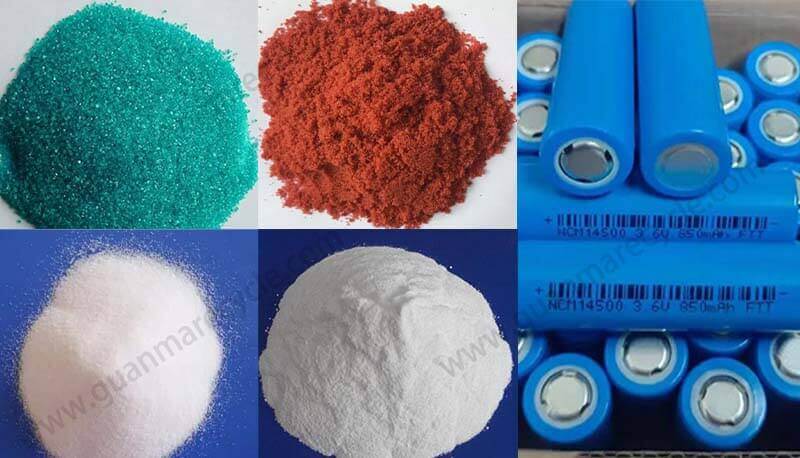
- Lithium: A key element recovered from lithium-ion battery cathode materials.
- Nickel and cobalt: Valuable metals found in many NMC and NCA battery chemistries.
- Manganese: A component of several lithium-ion battery cathode materials.
- Graphite: A major material recovered from battery anodes.
- Other materials: Copper, aluminum, iron, and residual organic compounds may also be present in varying amounts.
LFP and NMC batteries produce black mass with different compositions. Recyclers should evaluate their feedstock before selecting a suitable recovery process.
How Is Black Mass Produced?
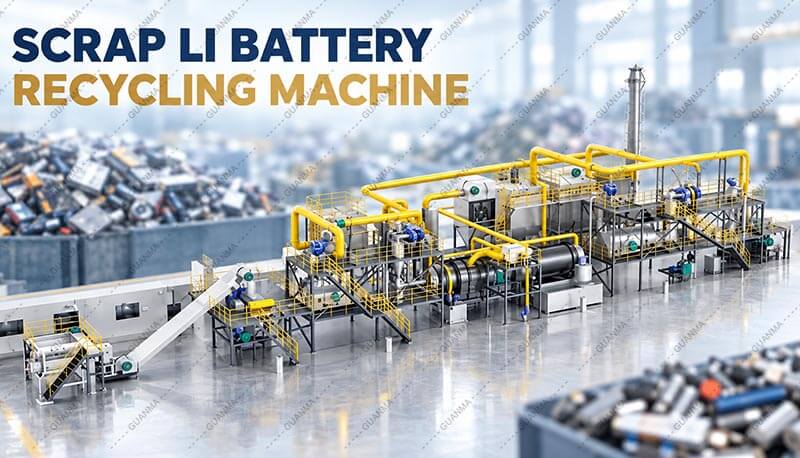
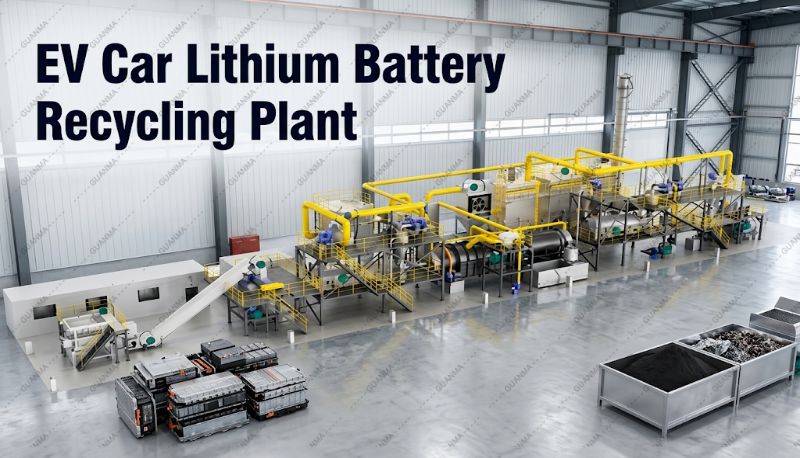
A lithium-ion battery recycling line mainly include several stages:
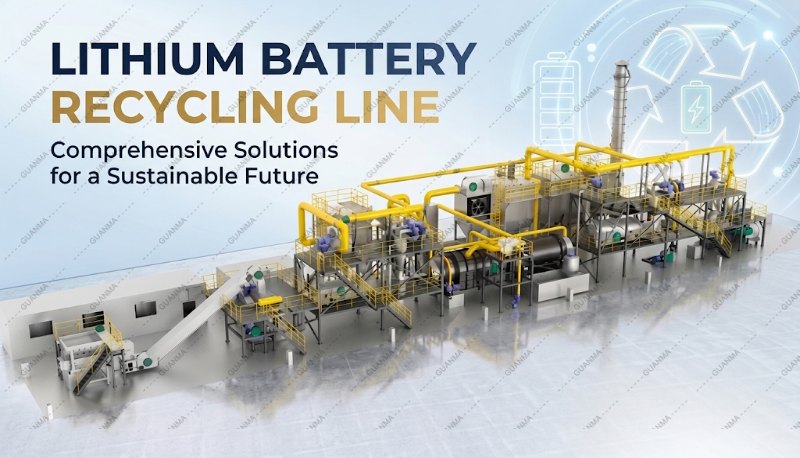
1. Lithium Battery Discharging and Feeding
Operators discharge batteries when required by the selected process and prepare them for controlled feeding.
2. Crushing and Shredding
Crushers and shredders reduce batteries to smaller particles, helping release electrode materials from their current collectors.
3. Thermal Treatment and Material Separation
Depending on the process design, thermal treatment or pyrolysis can remove residual electrolyte components and decompose binders. Crushing, screening, and separation equipment then help separate black mass from copper, aluminum, and other fractions.
Not every recycling line requires pyrolysis. The appropriate configuration depends on the lithium battery recycling process you choose.
4. Black Mass Collection
The recovered black mass is collected for storage, quality testing, and further processing. Effective separation helps control contamination and improve product consistency.
Why Is Black Mass Valuable?
Black mass concentrates valuable battery materials into an intermediate product that lithium battery recycling facilities can process further. This allows downstream refiners to focus on recovering useful materials without processing entire battery assemblies.
Its commercial value depends on metal content, moisture, impurity levels, battery chemistry, and prevailing market prices. Higher-quality black mass may simplify downstream processing, but profitability also depends on recovery costs and final product specifications.
Recycling black mass supports resource conservation by returning recovered materials to the supply chain and reducing reliance on newly mined resources.
How Is Black Mass Further Processed?
Black mass is an intermediate material, not a finished battery-grade product. Lithium-ion battery hydrometallurgical recycling may involve leaching, solid-liquid separation, purification, and precipitation to recover target materials.
Some facilities sell black mass to specialized refiners, while others integrate additional metal recovery processes into their operations.
Choose the Right Lithium-Ion Battery Recycling Equipment
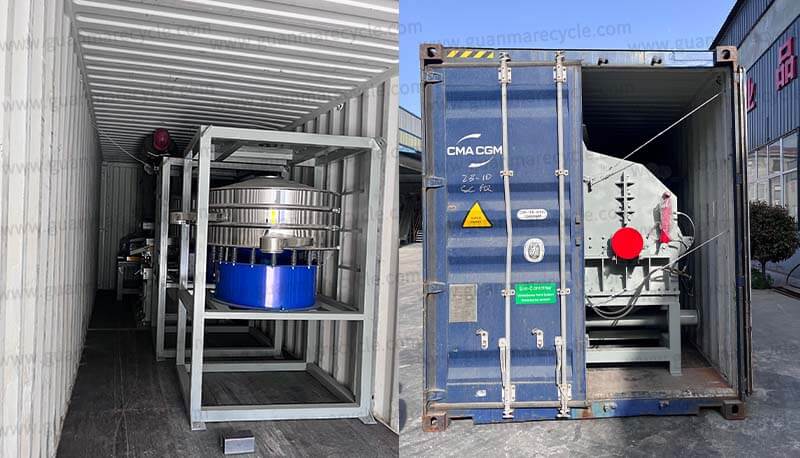
Producing consistent black mass starts with a well-designed lithium battery recycling line. Equipment selection should consider battery chemistry, feedstock condition, processing capacity, material recovery requirements, and environmental controls.
Guanma Machinery provides integrated lithium battery recycling solutions and recycling equipment processing requirements.
Planning a lithium-ion battery recycling project? Contact Guanma Machinery with your battery type, target processing capacity, and required output materials. Our team can help you evaluate a suitable recycling line for your project.
📩 Get Your Free Quote Today
Contact us today to discuss your project, capacity requirements, and target materials. Our team will reply within 24 hours with a customized proposal. You can also reach us directly at [email protected] — we are here to help!