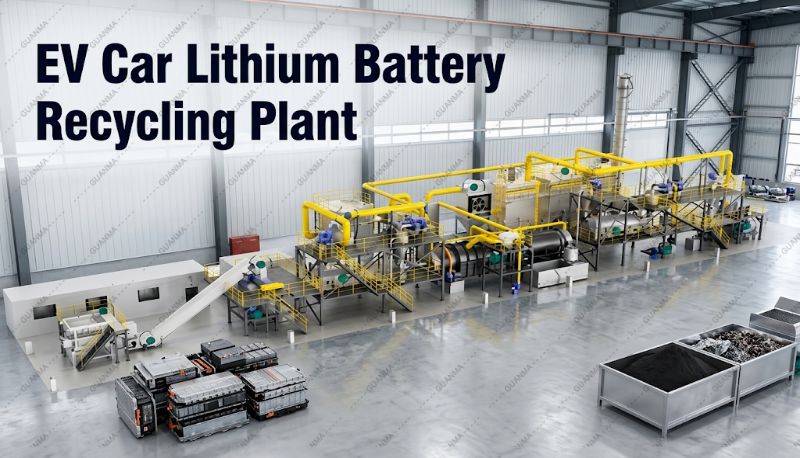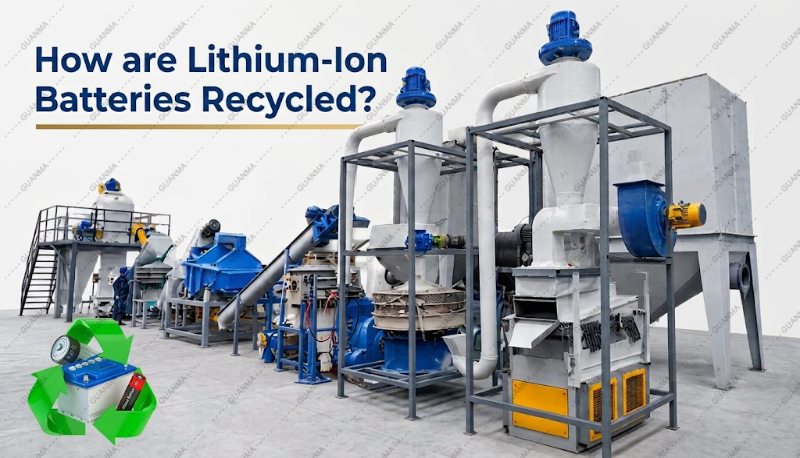
The fastest way to choose a professional scrap Li battery recycling machine manufacturer is to audit four things before you ever discuss price: verifiable engineering capability, real black mass recovery data, EHS and certification compliance, and the depth of after-sales support.
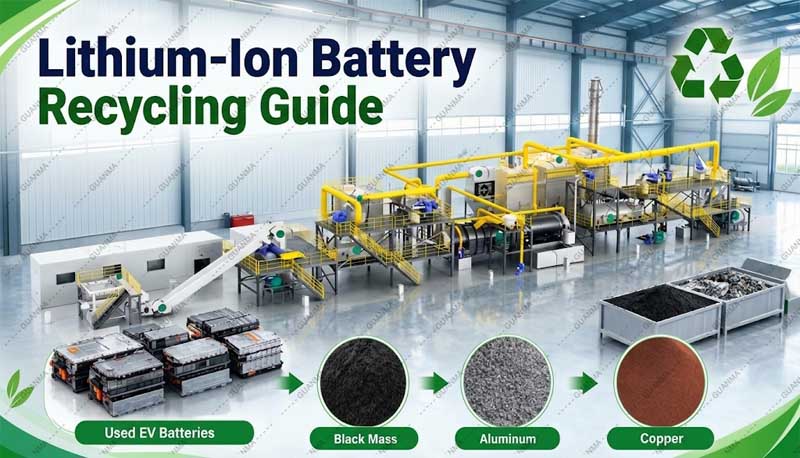
Why the Manufacturer Matters More Than the Spec Sheet
Two suppliers can quote “1,000 kg/h lithium battery recycling line” and deliver completely different results. Blade material, pyrolysis temperature control, dust collection design, and PLC logic determine whether a plant runs 24/7 or shuts down every three weeks for maintenance.
7 Criteria to Evaluate a Scrap Li Battery Recycling Machine Manufacturer
1. Verifiable Engineering and Manufacturing Capability
Ask for a live factory walkthrough by video, a list of in-house machining equipment, and the size of the mechanical. A real manufacturer controls its own fabrication; a trading company cannot.
2. Verified Recovery Rate and Black Mass Purity Data
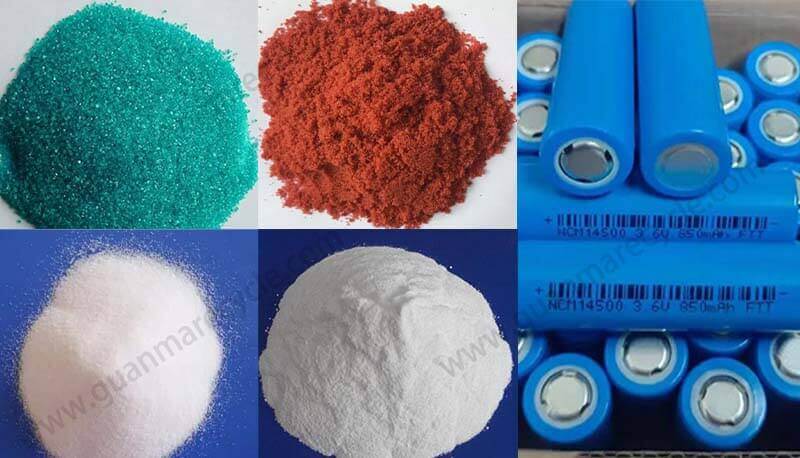
Request recovery figures for lithium, cobalt, nickel, copper, and aluminium separately, plus black mass purity. Insist on third-party test reports or customer site data. Typical industry benchmarks sit at 95%+ for copper and aluminium separation and 90%+ for lithium in black mass.
3. EHS Compliance and International Certification
For export projects, confirm CE marking, ISO 9001 with traceable certificate numbers. Ask how the line controls exhaust gas (bag filter + activated carbon + scrubber), wastewater recycling, and noise.
4. Customization for Different Battery Chemistries
LFP, NMC, LCO, cylindrical, pouch, and prismatic cells behave differently in shredding and separation. A capable manufacturer will offer nitrogen protection for safety, adjustable pyrolysis parameters, and modular configuration for wet or dry discharge pre-treatment.
5. After-Sales Support, Installation, and Spare Parts
Ask who installs and commissions the line, how long training lasts, and what the guaranteed spare parts lead time is. Request a wear-part list with prices up front.
6. Sample Testing and On-Site Trial Runs
Send 20–50 kg of your own scrap batteries for a trial. Compare the output report — granule size, metal purity, black mass yield — against the quotation.
7. Transparent Cost Structure and Payback Analysis
A professional quote separates equipment, civil works, power supply, installation, and consumables.
Key Questions to Ask a Li Battery Recycling Machine Supplier
- What is the actual throughput on LFP versus NMC feed?
- Which components are branded (motors, PLC, reducers) and which are self-made?
- What happens if recovery rate falls below the contracted figure?
- How many engineers will attend installation, and for how long?
- What is the warranty period and what does it exclude?
Contact a Scrap Li Battery Recycling Machine Manufacturer
Choosing the right scrap Li battery recycling machine manufacturer is a technical decision, not a price decision. Start by requesting a factory audit, a sample test, and a transparent cost breakdown from at least three suppliers.
Contact Guanma Machinery team today to send your battery samples and receive a full recovery report and customized proposal for your project.
📩 Get Your Free Quote Today
Contact us today to discuss your project, capacity requirements, and target materials. Our team will reply within 24 hours with a customized proposal. You can also reach us directly at [email protected] — we are here to help!