I. Lithium Battery recycling equipment Processing Capacity and Equipment Scale
1. Size and Quantity of Core Lithium Battery Equipment
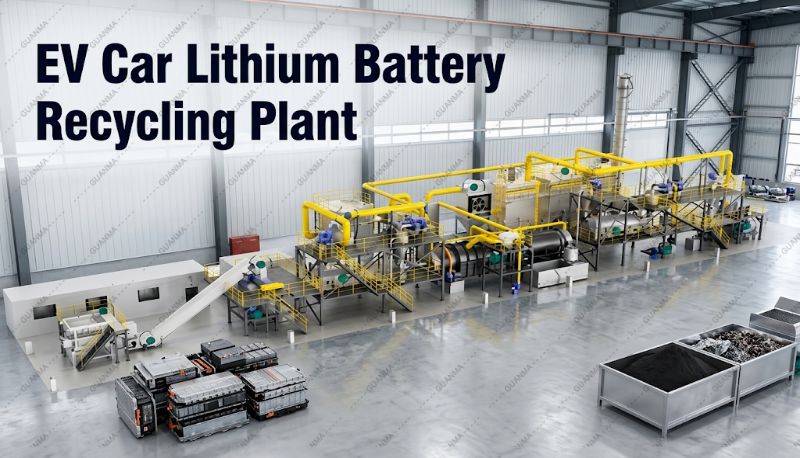
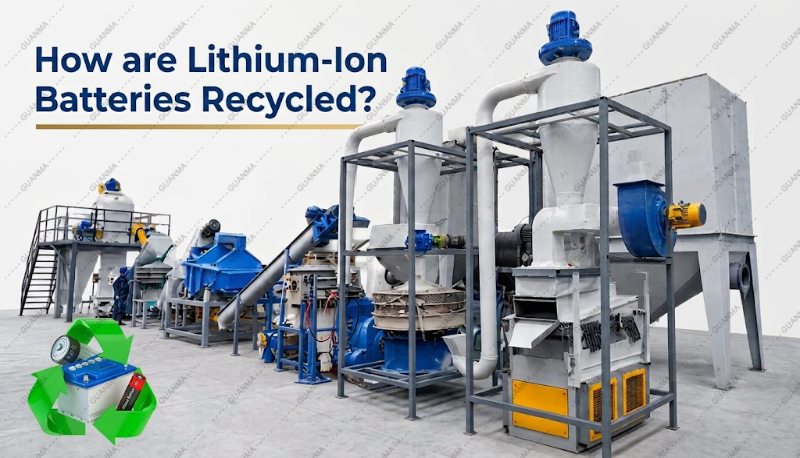
Due to the greater processing requirements, a lithium battery recycling line with a daily processing capacity of 1,000 kg will require larger equipment for crushing and sorting than a line with a daily processing capacity of 500 kg. For example, the crusher’s feed port will be larger and the crushing chamber will have a higher volume to allow more used lithium batteries to be fed and crushed simultaneously.
At the same time, equipment such as screening and sorting equipment will be increased in number or specifications to meet the demand for more material per hour.
In actual waste lithium-ion battery cell crushing and sorting system packages, the 500 kg equipment utilizes an integrated design. To achieve a processing capacity of 500 kg per hour, the equipment scale will need to be further expanded. Larger equipment increases the processing capacity of each unit, thereby increasing the overall lithium battery recycling volume.
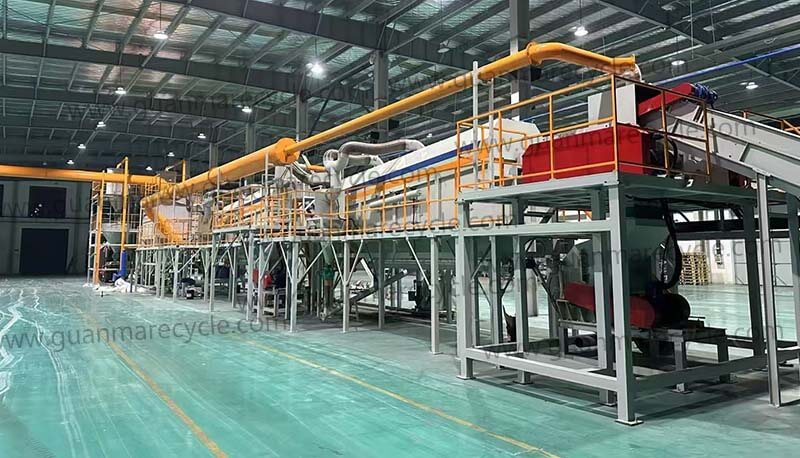
2. Lithium Battery Production Line Layout and Floor Space
A lithium battery recycling line with a daily processing capacity of 1,000 kg requires a more complex layout, requiring a larger footprint to accommodate more equipment and ensure smooth transfer of lithium batteries throughout the recycling line.
For example, temporary storage areas for lithium battery materials and transition areas between different processing stages require more space.
According to relevant data, a 500 kg lithium battery recycling line requires approximately 66 square meters of floor space. If the processing capacity is increased to 1,000 kg, the floor space required will increase significantly, potentially reaching several thousand square meters.
In contrast, a 500 kg processing line will require a much smaller footprint, perhaps only a few hundred square meters. The specific size depends on the equipment selection and layout design.
II. The Depth and Complexity of Lithium Battery Processing
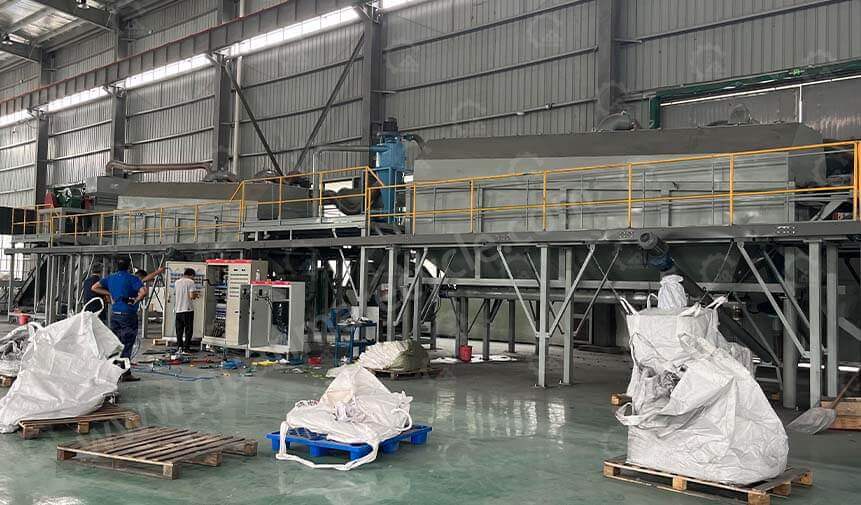
1. Lithium Battery Sorting Refinement
As processing volume increases, a 1,000 kg lithium battery recycling line requires a higher level of refinement in sorting. Due to the large volume of material being processed, insufficient sorting can significantly impact subsequent processes such as metal extraction, resulting in lower metal recovery rates and reduced product purity.
Sorting waste lithium batteries requires more advanced technology and equipment for precise sorting. For example, more advanced AI image recognition technology combined with additional sensors may be used to more accurately identify and classify battery types (prismatic, cylindrical, pouch) and chemical compositions (lithium iron phosphate, ternary lithium batteries, etc.), ensuring that different battery types enter the appropriate processing flow. In comparison, the sorting system for a 500 kg lithium battery line may require relatively lower precision and complexity.
2. Optimizing Lithium Battery Metal Extraction Processes
To efficiently and efficiently extract valuable metals from large quantities of used lithium batteries at high purity, a 1,000 kg processing capacity production line may employ more complex and optimized metal extraction processes.
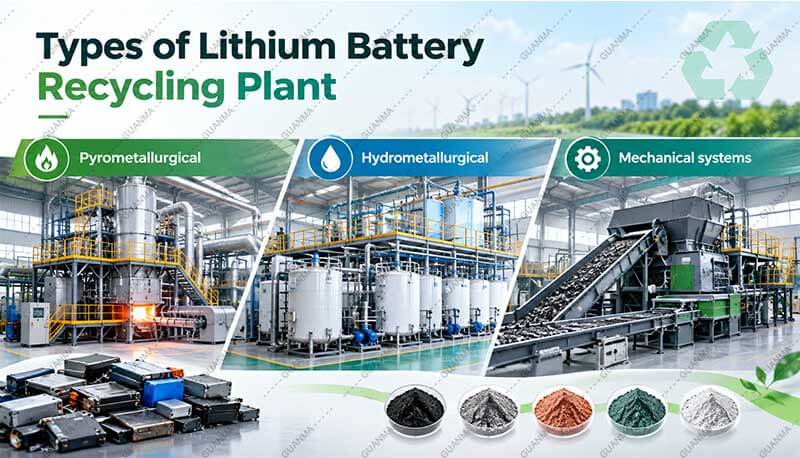
For example, in the extraction of metals such as lithium, cobalt, and nickel, multiple leaching methods, such as acid and alkaline leaching, may be combined. Leaching conditions (temperature, time, reagent concentration, etc.) and multi-stage extraction and stripping steps can be optimized to improve the recovery rate and purity of lithium battery metals.
For example, Guanma Equipment’s unique 600-750°C high-temperature roasting process for ternary batteries migrates metals such as lithium, cobalt, and nickel to the surface, resulting in a recovery rate exceeding 98%. If the processing capacity is increased to 1,000 kg, this process may be further optimized to meet large-scale production needs. A 500 kg processing capacity production line, on the other hand, may employ a relatively conventional lithium battery metal extraction process, which may yield slightly lower metal recovery rates and purity.
📩 Get Your Free Quote Today
Contact us today to discuss your project, capacity requirements, and target materials. Our team will reply within 24 hours with a customized proposal. You can also reach us directly at [email protected] — we are here to help!