Choosing a reliable lithium battery recycling plant is critical for investment return, safe production, environmental compliance and long-term operation. With different machine quality, process design and after-sales service on the market, investors need to evaluate core factors before purchasing a complete waste battery recycling line.
1. Confirm Compatibility With Battery Types
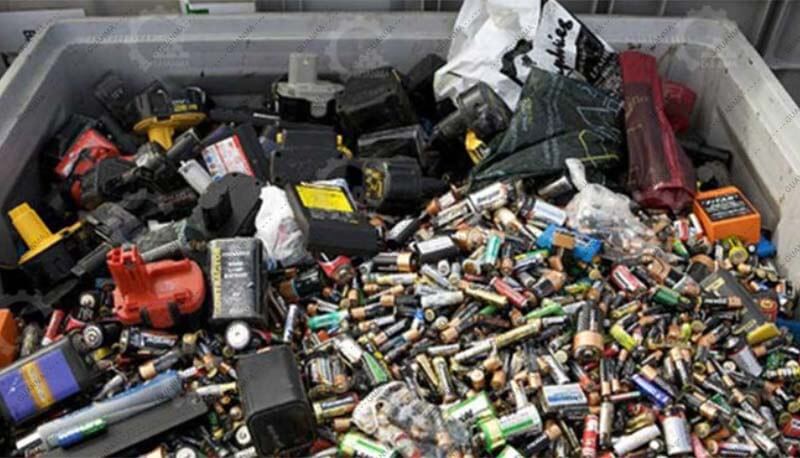
A professional battery recycling plant must handle multiple battery types to expand your business scope.
Lithium iron phosphate (LFP) batteries
EV power batteries
Energy storage batteries
3C consumer batteries and battery pole scraps
2. Lithium Battery Recycling Core Process and Safety Design
Lithium batteries contain residual electricity, electrolyte and flammable materials, so safety is the top priority.
Oxygen‑free nitrogen protection system to prevent fire and explosion
Explosion‑proof dust collector and gas recovery device
Over-temperature monitoring and automatic alarm system
High-quality recycling plants adopt dry physical separation and low-temperature pyrolysis technology to reduce risks and lower operating costs.
3. Focus on Recycling Efficiency and Purity
The core profit of battery recycling comes from high-purity recycled materials.
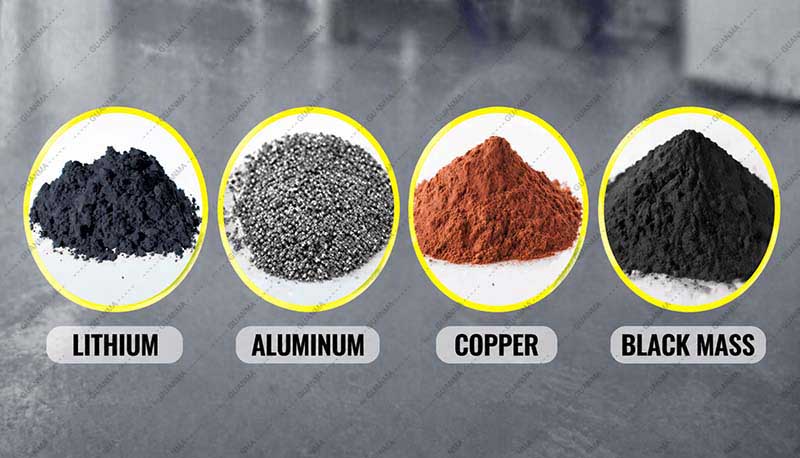
Overall metal recovery rate ≥ 98%
High-purity black mass, copper and aluminum powder
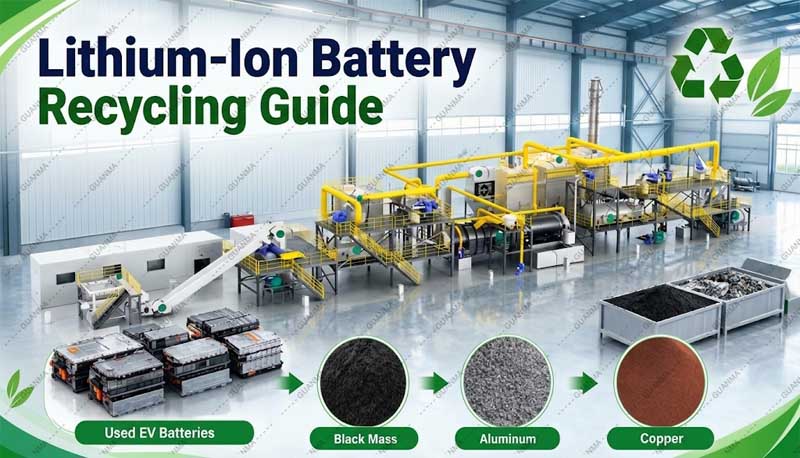
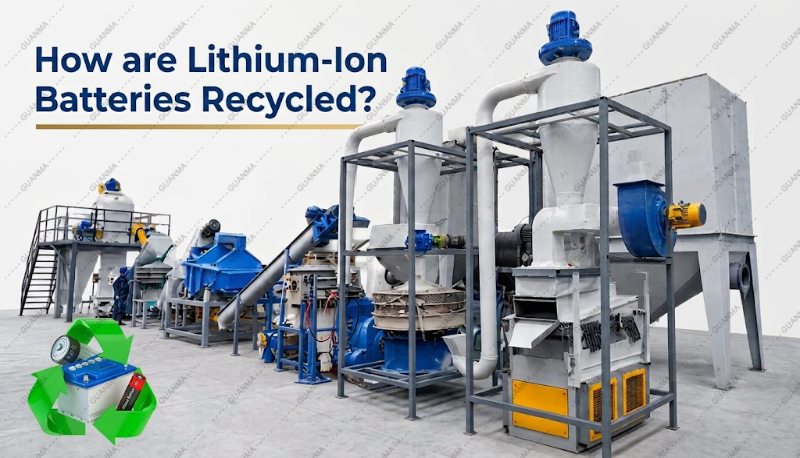
Advanced combination: crushing, magnetic separation, air separation, electrostatic separation
4. Environmental Compliance Configuration
Global environmental regulations become stricter, so your plant must meet local emission standards.
Equipped with complete supporting systems:
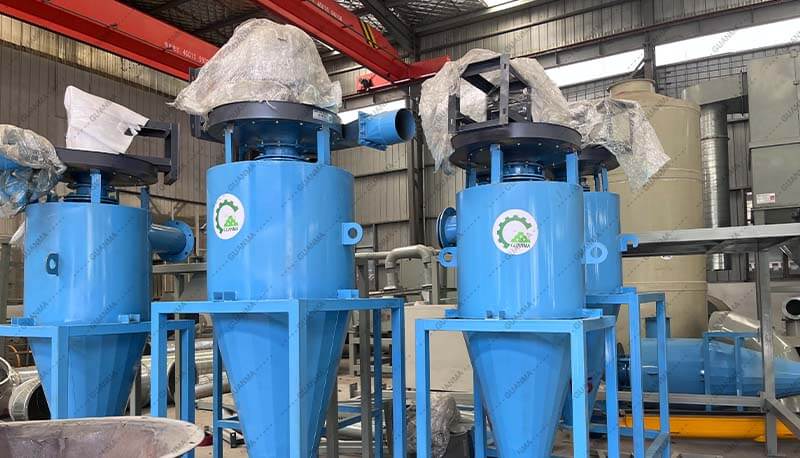
Cyclone dust collector and pulse bag dust removal system
Waste gas purification
Closed waste residue collection, no secondary pollution
5. Customized Capacity and Layout
Different customers need different output, from small, medium to large capacity.
Formal manufacturers provide:
Custom hourly processing capacity
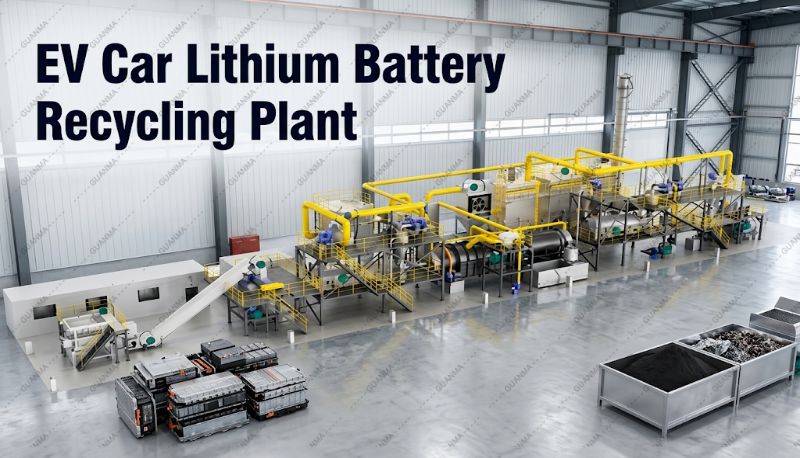
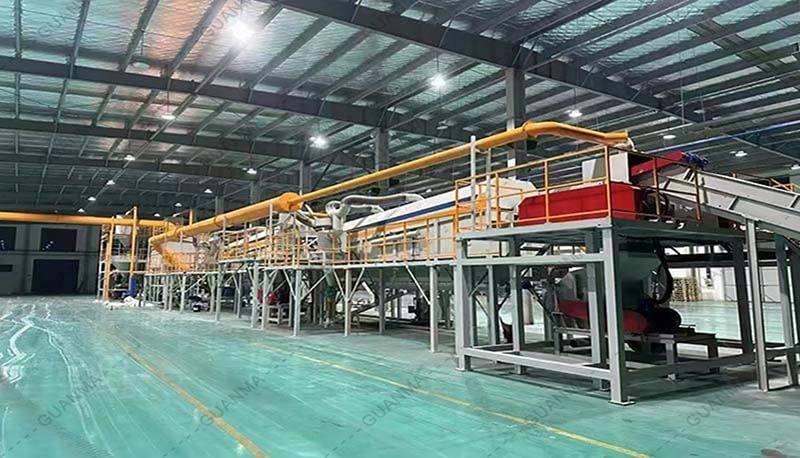
Reasonable production line layout design
Compact structure to save factory space
Low energy consumption and easy daily maintenance
6. Manufacturer Strength and After-Sales Service
A good lithium-ion battery recycling machine needs long-term technical support.
Independent Researched and developed and factory production
Complete machine testing before delivery
Overseas installation, commissioning and worker training
Long-term spare parts supply and remote after-sales service
Avoid small workshops with unstable quality and no after-sales support.
7. Cost-Effectiveness and Overall Solution
Do not only compare unit prices. Focus on the total solution:
Stable operation and low failure rate
Low power consumption and labor cost
Complete process design from feeding to finished materials
To select a qualified lithium battery recycling plant, you need to check battery compatibility, safety design, recycling rate, environmental configuration, capacity customization and after-sales service.
We provide professional customized lithium battery pyrolysis and physical separation recycling lines. If you want to know more, please contact Guanma Machinery.
📩 Get Your Free Quote Today
Contact us today to discuss your project, capacity requirements, and target materials. Our team will reply within 24 hours with a customized proposal. You can also reach us directly at [email protected] — we are here to help!