Is lithium battery recycling profitable? It can be, but profitability depends on more than the value of recovered materials.
Feedstock cost, battery chemistry, processing capacity, recovery efficiency, energy consumption, equipment investment, and local operating costs all affect the economics of a lithium-ion battery recycling business.
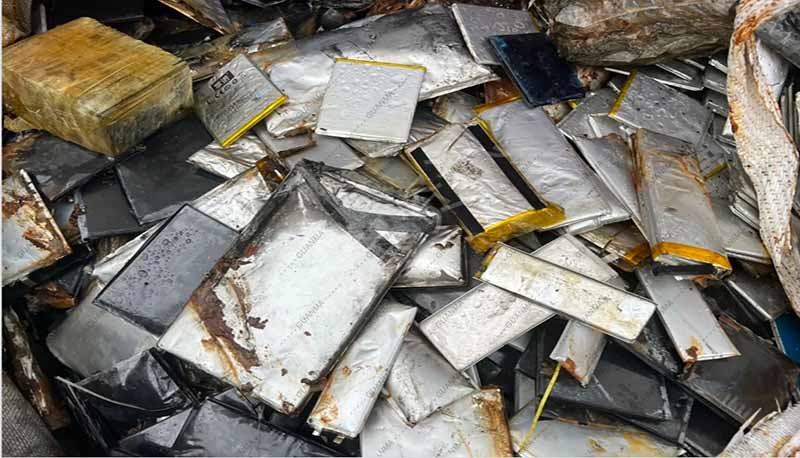
As global battery deployment continues to increase, recycling is becoming an increasingly important part of the battery supply chain. The IEA reports that global lithium-ion battery deployment increased more than sixfold between 2020 and 2025. However, most recently deployed batteries are still in use, which means the availability of end-of-life batteries can vary by market.
What Determines Lithium Battery Recycling Profitability?
Feedstock cost is one of the key factors. A lithium battery recycling plant needs a stable supply of waste lithium-ion batteries, production scrap, or other suitable feedstock.
Transportation and purchasing costs can directly affect project economics. A reliable local feedstock supply can therefore be important when planning a new recycling plant.
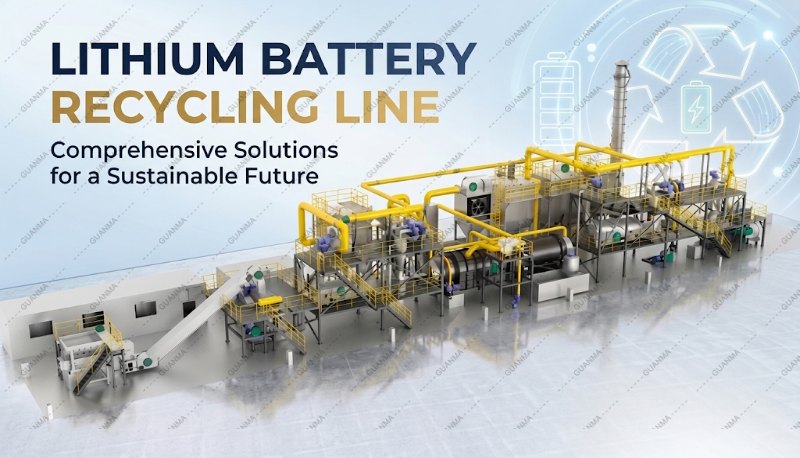
The value of recovered materials is another important factor. Depending on battery chemistry and the recycling process, a plant may recover black mass, copper, aluminum, lithium-bearing materials, nickel, and cobalt.
Does Battery Chemistry Affect Profitability?
Yes. Different battery chemistries contain different materials, so their recycling economics can vary.
Common chemistries include LFP, NMC, NCA, and LCO. LFP has become particularly important, accounting for more than 55% of global EV battery deployment in 2025, according to the IEA.
Unlike NMC batteries, LFP batteries do not contain nickel or cobalt. This can affect the value of recovered materials and makes efficient lithium recovery and cost control increasingly important.
Can Recycling Equipment Improve Project Economics?
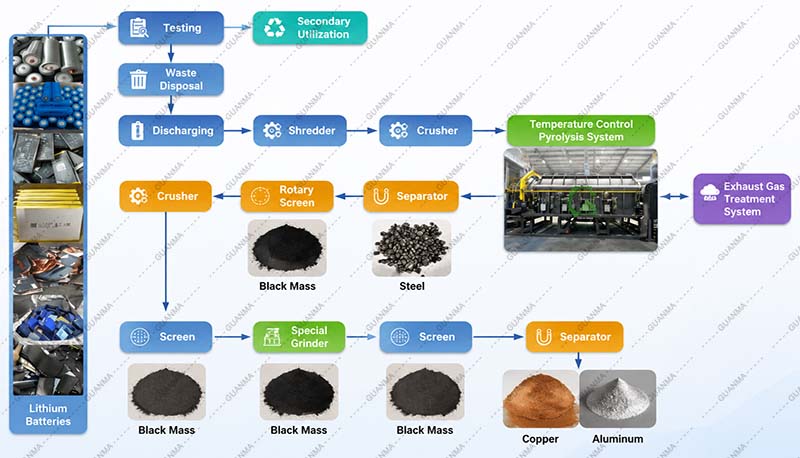
The lithium battery recycling equipment configuration can have a significant impact on processing efficiency and material recovery.
A recycling system should be designed according to the battery type, feedstock condition, processing capacity, target products, and local environmental requirements.
Depending on the project, the process may include feeding, shredding, crushing, pyrolysis or thermal treatment, cooling, screening, grinding, and separation.
An efficient lithium battery recycling system can help improve material recovery while managing energy, labor, maintenance, and environmental treatment costs.
How to Evaluate a Lithium Battery Recycling Project
Before investing in a lithium battery recycling plant, consider these key factors:
- Feedstock availability and purchase cost
- Battery chemistry and material composition
- Required processing capacity
- Target recovered products
- Recovery efficiency
- Equipment and energy costs
- Environmental protection requirements
- Local downstream markets
Therefore, is lithium battery recycling profitable? There is no single profit margin that applies to every lithium battery recycling project.
Lithium battery recycling machinery can be commercially viable when the feedstock, recycling process, equipment configuration, processing capacity, and downstream markets are properly matched.
Guanma Machinery provides lithium battery recycling equipment and complete recycling solutions for different battery types and processing capacities. Contact Guanma Machinery to discuss a suitable recycling solution for your project.
📩 Get Your Free Quote Today
Contact us today to discuss your project, capacity requirements, and target materials. Our team will reply within 24 hours with a customized proposal. You can also reach us directly at [email protected] — we are here to help!